
CX Framework Series #6: Customer Centric Culture
How to align all employees with the customer experience strategy
It is very important to realise that Customer Experience and having a customer centric mindset is often a cultural process within organizations. For that reason, a majority of leaders expressed that the existing culture within the company forms a barrier that has to be taken down before they can start managing daily operations with the customer in mind.

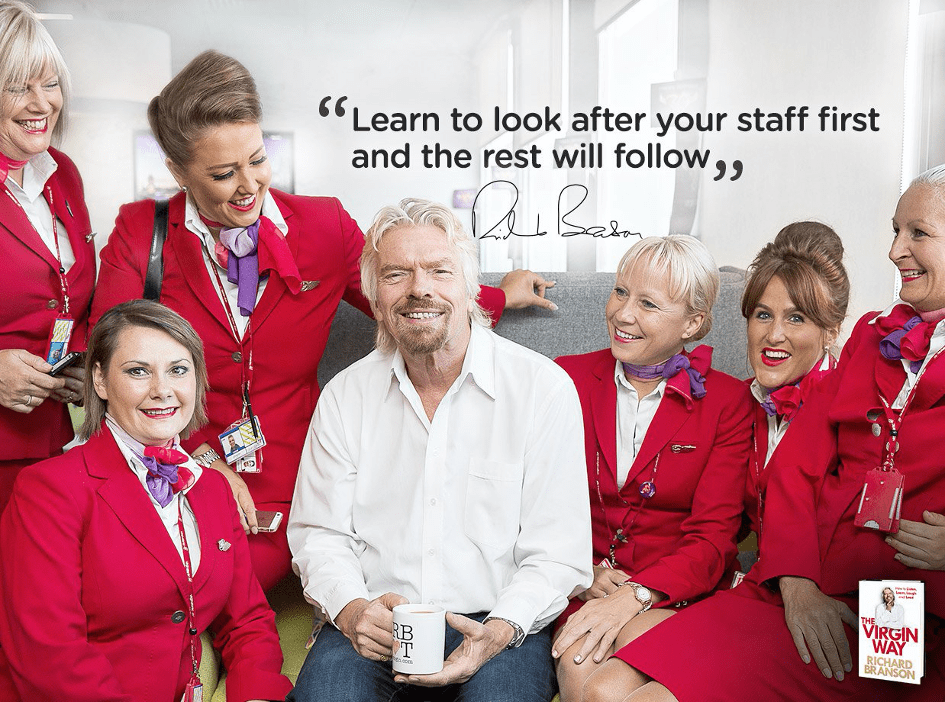
There are different approaches for looking at ways in which the customer can be at the centre of the organization, and two vivid examples really spring to mind. Steve Jobs always started with the customer experience and worked back towards the technology. Secondly, Richard Branson who, in contrast to the previous example, only looks from an 'employees-first' point of view. His view is that when you treat your employees well, they will love their jobs and bring that same good feeling to the customers who, in their turn, have a positive feeling about the organization and are willing to do more business with you.
Employee engagement as driving factor for customer happiness
Not every organization needs to have the exact same mindset as Richard Branson to achieve happy customers, but you need to have happy employees to really make a difference. HR has an important role in becoming customer centric in all phases of the HR Cycle.
It starts before your onboarding process. During the recruitment process, recruiters need to focus more on talent or attitude and not so much on skills. Skills can (and should!) be learned and taught when your hire is settling into their job. Also, your recruiters need to recruit with purpose and really look for a good fit with the organization. And keep in mind: with every pair of hands you get a brain for free.
When you hire an employee, inspire them to pursue continuous development, participate in training sessions, courses and study. In that way you give them the power to develop what they really want. You can also make this competitive or place development in a game-setting in order to make it more fun and an enjoyable challenge to keep on developing.
Best practices in improving employee engagement
It is very important to drive cultural change within the organization as a whole. This is a continuous process that might be difficult to implement or keep alive, but it is worth it and employees will adopt some or all of the best practices. After all, they are designed to give employees a happier workplace.
In the masterclass we had fun in an assignment to create a Museum of Cultural Change, where all participants shared Best practices.
Amongst them were:
- Storytelling: share customer stories in (Board) meetings
- Awards: give employees whose work resulted in great customer experiences an award and make them feel special
- King/Queen for a week: hang a huge crown over the workplace of a very customer minded employee. Everyone in the organization will notice this and congratulate them
- Random acts of kindness: give employees a budget so they can surprise random customers with a gift
- Compliment shower: print all the compliments of customers who gave a 9 or 10 in the NPS survey, make confetti of the prints and unleash a real compliment shower over your employees at the end of a town hall meeting
- Invite the customer to the work place: just like bringing a family member to work, invite a customer over and even let them attend a meeting. See what happens in the organization and how people react
- Give the customer a chair in the meeting. Make a visual representation of your customer and assign him/her to a seat in the Board rooms. In this way, the customer is always visible.
Ways in which to reward employees in their customer centric behaviour

Photo: https://www.slideshare.net/KaiCrow/asknicely-more-valuable-customers-with-nps
The first thing that may come to mind when thinking about rewarding employees for their efforts in customer excellence, may be to give them a bonus when their NPS has reached a certain level. This approach is brilliant, but be aware of possible gaming. You could also reward those who are positively named in customer surveys, give recognition to people behind the scenes and empower peers to celebrate each other's work. Or make it easier for your employees to balance their work/life, offer benefits that reduce stress levels and treat the people who deal with tough customer experiences with the utmost respect.
There are lots of ways to encourage your employees to work on a more customer centric manner, you only have to be creative and persist in the execution! It won't be easy, since we all know Culture eats Strategy for breakfast. But this is where success is made and where the most fun can be had.
Want to grow your Customer Experience competences?
These are only some of the highlights Milou took away from attending the Customer Experience Masterclass. Would you like to know more? Join our next CX Masterclass in February or June 2018, click here for more information or here for reserving your place
Customer Experience Framework and complete list of blog posts in this series
This post is part of a wider series about all the 6 CX disciplines that represent the CXPA Framework around which the CCXP exam is structured and that we cover in the CX Masterclass.
Find here the complete list of the other posts in this series:
- CX Strategy
- Customer Understanding
- Design, Improvement and Innovation
- Measurement
- Governance
- Culture (this one)
About this series
The foundations for these blogposts are written by Milou van Kerkhof following the June 2017 CX Masterclass given by Nienke Bloem and Rosaria Cirillo. Milou attended this as a newcomer in Customer Experience. These blogposts have been slightly edited and reflect only the highlights of the content of each module.
*****
Nienke Bloem is often called the Customer Experience speaker in the blue dress.
She's a global CX thought leader, educator and a global keynote speaker who inspires audiences with best practices and proven methodologies. She leads a speaking practice, a CX game company and a training business; she breathes Customer Experiences and is author of two CX books.
Her two-day Customer Experience Masterclass is known as the best program to prepare for your CCXP and she is the go-to person for CX leaders who want to advance their leadership and bring direct results from their Customer Experience transformation programs. Since 2020, she hosts a CX Leadership Masterminds program and helps leaders spice up their leadership and deliver an engaging CX Story including a solid CX Strategy. Besides, she is a modern-day pilgrim and found the parallel with leading customer centric transformations.
With her over 20 years of corporate experience, she speaks the business language. Her keynotes and education programs in Customer Experience are inspiring and hands-on. She is one of the few Recognized Training Partners of the CXPA and it is her mission to Make Customer Experience Work and help you deliver business results.